

ISTE+ASCD Community of Practice Cohort 1 Wraps: What Happens When Educators Take the Lead on AI
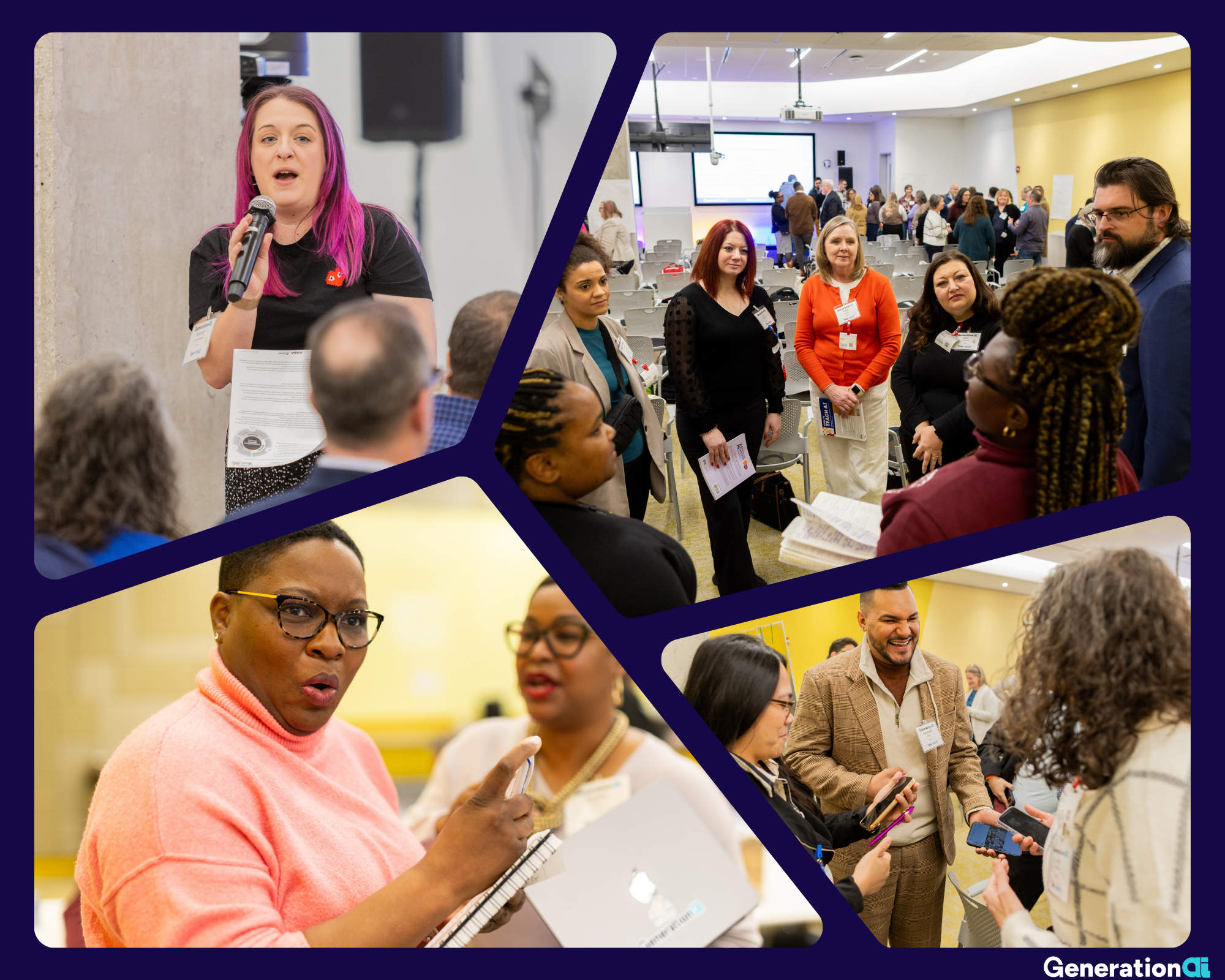
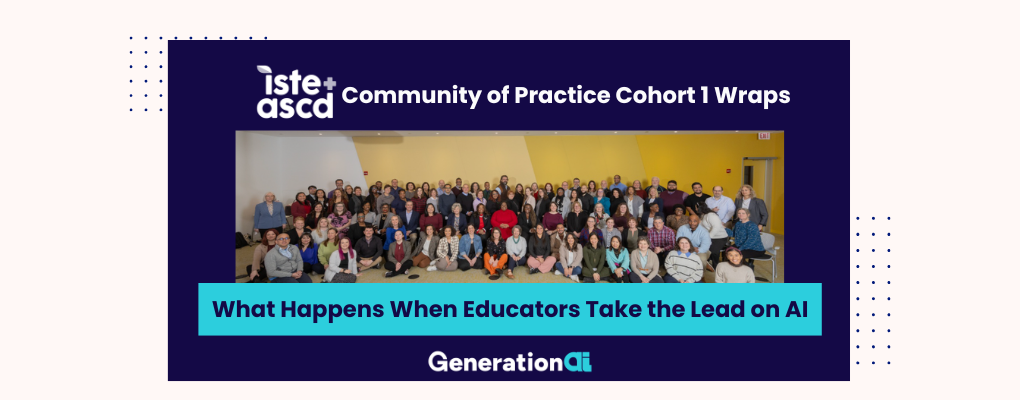
Across the country, educators in ISTE+ASCD's first cohort of the GenerationAI Community of Practice (CoP), made up of teacher, building, and teacher leaders from across the United States, tackled a shared challenge: how to move AI from buzzword to meaningful practice. Over the course of their cohort experience, participants designed and carried out action research projects rooted in real problems they face every day. Their work reveals both the promise and the complexity of AI integration in K-12 education.
Here are just a few highlights from some of the CoP members’ projects:
From Policy to Practice
In Maryland, one district level leader developed six guiding principles for AI use and rolled out a strategically sequenced professional development plan that reached all instructional staff, building leadership, and even operational teams, like business services and school nurses. Post-training data showed that 94% of participating educators achieved at least basic AI comprehension, and 89% moved to readiness for action. Meanwhile, in Illinois, one superintendent flipped the script entirely by asking: what if students co-designed how AI is integrated? Eighth graders built their own AI applications addressing real community needs, from multilingual tutoring support to an immigration guidance system that cross-references reliable sources, earning a genuine seat at the policy table.
Centering Equity and Inclusion
For several educators, the driving motivation was ensuring that AI tools meet learners where they are, especially those historically underserved. A special education teacher in North Carolina, working with students who have combined vision and hearing differences, built an AI-powered tool that helps communication partners — teachers, paraprofessionals, and families — access vetted, research-based strategies in practical formats. Users reported increased confidence and more consistent collaboration across teams. In New Mexico, an innovation coordinator centered student voices by co-designing a "Middle School AI Summit" where 7th and 8th graders used the Graidients tool to discuss responsible AI use and brainstorm peer guidance. It showed the reality that even with preparation, disparities in AI literacy shape who can fully participate. Still, the experience confirmed that students are eager to share their perspectives, and the coordinator is now scaling the approach to additional school and district student council leadership; a meaningful step toward making student voice a lasting part of AI planning.
Shifting Culture, One Conversation at a Time
Many participants found that the hardest part wasn't the technology; it was changing habits and mindsets. A digital learning coach in Kentucky launched a student-led Help Desk where students managed device repairs, earned certifications, and then co-taught Google NotebookLM to peers during library classes. In Michigan, an instructional technology coordinator moved away from large-group PD that wasn't working and instead formed a cross-building teacher cohort that meets monthly. The result: ChatGPT usage hours among staff have already surpassed last year's total just four months into the school year. And in New York, a head of student support navigated deep faculty disagreements (English teachers and computer science teachers holding very different views) to arrive at shared guidelines that now require every assignment to include an AI transparency statement.
In The Classroom
Individual classroom teachers demonstrated how thoughtful AI use can directly serve students. An English teacher in Illinois collaborated with an EL push-in teacher to embed AI feedback tools into the writing process for English Learners, resulting in students who were more willing to take risks with sentence structure and persist through revision. In Missouri, a math teacher tackled student frustration with the textbook platform's bare-bones right-or-wrong feedback by introducing Snorkl AI, where students received detailed explanations of their reasoning. The project also opened up broader classroom conversations about AI, with students beginning to ask for permission and clarification on AI usage across assignments; a sign of growing critical awareness.
Across every project, one theme emerged consistently: community matters. Participants repeatedly described the cohort as the connective tissue that sustained their work through competing priorities, slow-moving committees, district roadblocks, and the sheer pace of AI's evolution. As one rural educator put it: "I no longer feel like I am navigating this work in isolation."
The GenerationAI Community of Practice demonstrates that when educators are given structure, support, and genuine peer connection, they don't just adopt AI — they lead with it, thoughtfully and on their own terms.
Congratulations to Cohort 1!
Interested in applying for a future ISTE+ASCD Community of Practice? Be sure to join the GenerationAI email list so you’ll be notified when applications for the next cohort open.
This article was drafted with assistance from Claude, an AI assistant by Anthropic.